




Reglamento sobre envases y residuos de envases (PPWR)
Stay ahead of PPWR requirements and compliance obligations
The EU Packaging and Packaging Waste Regulation is changing the future of packaging across European supply chains. With new requirements and ambitious reuse targets approaching, businesses need to start preparing now.
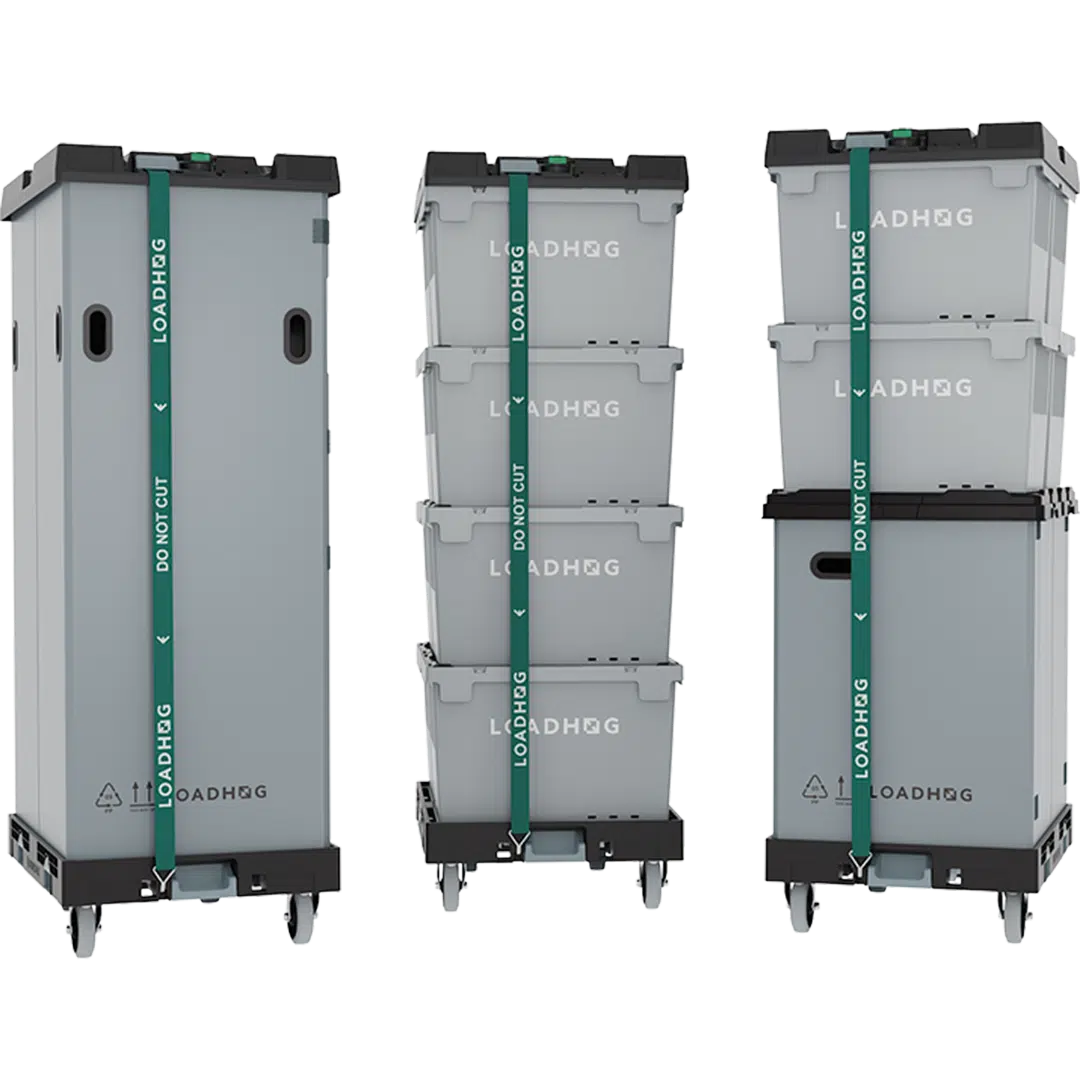
Loadhog specialises in reusable transport packaging, helping businesses explore practical alternatives to single-use packaging and prepare their packaging strategies for the changing regulatory landscape.
Whether you're a distributor, retailer, manufacturer or eCommerce business, discover how reusable transport packaging can support your journey towards a more circular supply chain.
¿Qué es PPWR?
PPWR is the EU Packaging and Packaging Waste Regulation. It sets rules for packaging design, reuse, recycling, labelling, and compliance information. The PPWR replaces the Packaging and Packaging Waste Directive and applies throughout the European Union.
- 40% of packaging to be reusable by 2030


Su objetivo
- Reducción de los residuos de envases
- Armonización de la normativa en todos los países de la UE
- Prohibición de los envases de un solo uso en diversos sectores
- Requisitos relativos a la reducción al mínimo del volumen de los envases
Su ámbito de aplicación
- Todos los envases comercializados en el mercado de la UE
- Todos los materiales: plástico, cartón, vidrio, metal…
- Todo tipo de empresas: industria manufacturera, comercio minorista, logística, comercio electrónico, etc.
- Toda la cadena de valor
- Todos los residuos
Sus pilares
- Para minimizar la cantidad de embalaje y reducir el espacio vacío en los paquetes
- Lograr que todos los envases sean reciclables para 2030
- Establecer un requisito de contenido mínimo de material reciclado para los envases de plástico
- Fomentar la reutilización, los programas de recarga y los sistemas de depósito y devolución
- Simplificar y normalizar el etiquetado para ofrecer información coherente
Tu socio para PPWR
- Fomento de la economía circular: nuestras soluciones de transporte reducen la necesidad de utilizar envases desechables y contribuyen de forma significativa a la conservación de recursos valiosos.
- Reutilizar antes de reciclar: los productos de Loadhog están diseñados para tener una larga vida útil y poder reutilizarse en repetidas ocasiones. Gracias a los programas de reutilización, limpieza y devolución, el reciclaje se reduce al mínimo absoluto.
- Reducción de residuos mediante un reciclaje selectivo: nuestro socio se encarga de procesar y reciclar los residuos, que posteriormente se ponen a disposición para su reutilización.
- Etiquetado individual y trazabilidad: nuestros envases pueden marcarse individualmente mediante etiquetas RFID, códigos de barras o códigos QR.
- Recogida de envases usados: recogemos los envases usados de nuestros clientes, los reciclamos adecuadamente y reincorporamos los materiales al proceso de producción.
¿Por qué pasar a utilizar embalajes de transporte reutilizables (RTP)?
Las ventajas
- Cumplimiento de los objetivos de reutilización y reciclabilidad
- Reducción de los costes de materiales y de los gastos de gestión de residuos
- Mayor eficiencia de la cadena de suministro
- Reducción de las emisiones de CO₂
Esperanza de vida
- +/- 5 years – depending on usage scenarios and handling methods
- El umbral de rentabilidad de los envases reutilizables se alcanza, por lo general, tras entre 5 y 15 ciclos, dependiendo de los procesos logísticos y de las tasas de desperdicio.
El ahorro
- Reducción de los daños en los productos
- Ahorro de espacio en el almacén y durante el transporte
- Mayor eficiencia en la manipulación
- Apoyo a la automatización y la trazabilidad

Packaging and Packaging Waste Regulation (PPWR) FAQs
What is the PPWR?
The Packaging and Packaging Waste Regulation, Regulation (EU) 2025/40, is EU law covering the whole life of packaging: the substances in it (Article 5), how recyclable it is (Article 6), how much recycled material it contains (Article 7), how little material it uses (Article 10), whether it is reused (Article 11), how it is labelled (Article 12), and who pays for it at end of life (Article 44). It replaces the 1994 Packaging Directive and applies in the same way in all 27 Member States. The current UK equivalent is the UK Producer Responsibility Obligations (Packaging & Packaging Waste) Regulations 2024/1332.
When does it start, and what are the dates that matter?
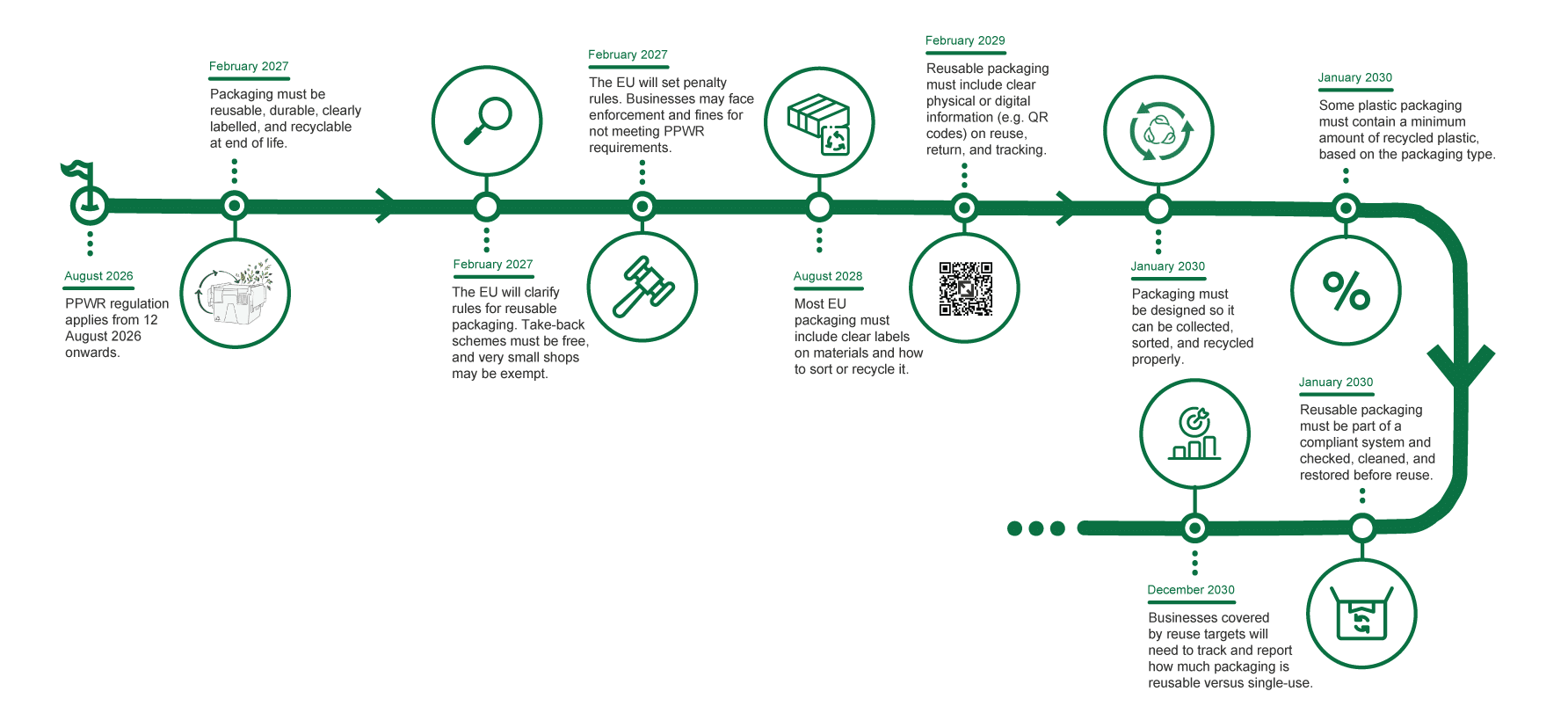
The EU Regulation entered into force on 11 February 2025 and applies from 12 August 2026. The requirements then phase in: labelling for material sorting from August 2028, reusability labels and QR codes from February 2029, and recyclability grades, recycled content and reuse targets from January 2030, tightening again in 2035, 2038 and 2040.
Does PPWR apply to a UK manufacturer like Loadhog?
Yes. The Regulation applies to packaging placed on the EU market whatever its origin, so a UK manufacturer exporting into the EU must comply. It also means our EU customers and importers will ask us for evidence rather than statements.
Is my item actually "packaging" under PPWR?
PPWR defines packaging by what an item does, not by what it is called, as demonstrated in Article 3. Anything used to contain, protect, handle, deliver or present goods is in scope, including transport packaging and packaging components. We assess our own product lines against that definition and will tell you what we have concluded for a given product reference.
Is PPWR voluntary, or only about single-use plastic?
Neither. The EU 2025/40 PPWR is a binding Regulation with penalties set by each Member State or the Commission, and it covers all packaging materials and all packaging types, including industrial and transport packaging.
Where can I obtain PPWR compliance documentation for Loadhog products?
For our existing customers, please reach out to your regional sales team member. New customers can contact info@loadhog.com.
Across the supply chain, who is responsible for what aspects?
PPWR gives each economic operator a defined role. Manufacturers assess their packaging against Articles 5 to 12, hold the technical documentation and issue the Declaration of Conformity. Suppliers pass on the material information the manufacturer needs. Importers check that the manufacturer has done this before the packaging enters the EU. Distributors check the documentation exists and must not alter or damage the packaging in their care. Fulfilment service providers must handle packaging so that it can still do its job.
Which role does Loadhog hold?
It depends on the route to market; we serve in different roles depending on how we make our products available on the EU Market. When we design and place our packaging on the EU market, we act as the manufacturer, with the associated assessment, documentation, and Declaration of Conformity obligations. Where we supply packaging to another business that places it on the market, we act as a supplier and provide the technical and material information they need. We confirm the role that applies to your arrangement in writing.
What must a distributor check before selling on?
Before making packaging available, a distributor must verify that the producer is registered, the required labelling is present, and the manufacturer's and importer's documentation is in place. They must also ensure the packaging is not modified or damaged while in their care.
How quickly must you respond to a compliance request?
Information requested by a national authority must be supplied within 10 days. While not a specified requirement for customer requests, Loadhog commits to a window of 14 business days from receipt of a completed PPWR compliance request.


