




Packaging and Packaging Waste Regulation (PPWR)
Who We Are
PPWR is the EU Packaging and Packaging Waste Regulation. It sets rules for packaging design, reuse, recycling, labelling, and compliance information.
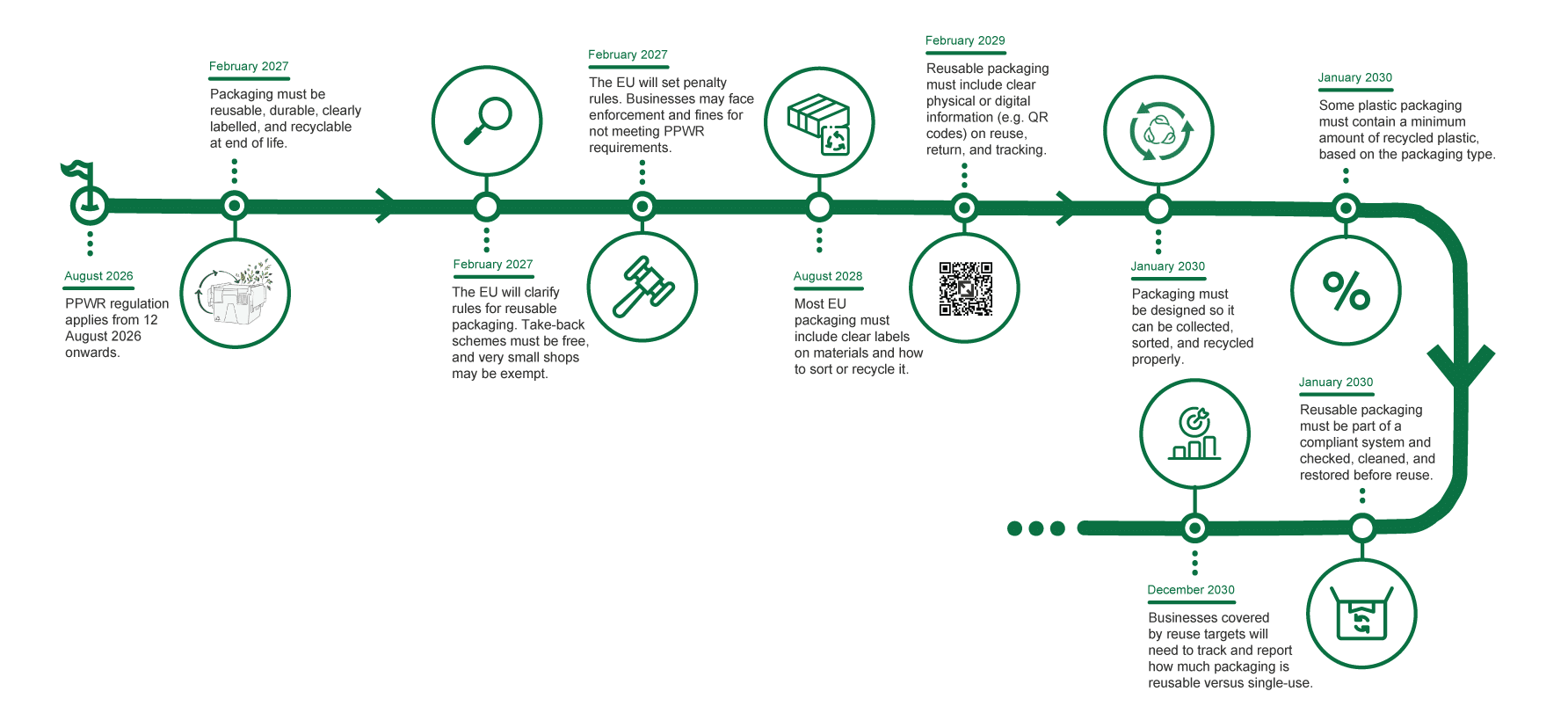
- Entry into force: 11 February 2025
- Implementation: 12 August 2026
The PPWR replaces the Packaging and Packaging Waste Directive and applies throughout the European Union.


Its goal
- Reduction of packaging waste
- Harmonisation of rules across EU countries
- Ban on single-use packaging in various sectors
- Requirements regarding the minimisation of packaging volume
Its scope
- All packaging placed on the EU market
- All materials: plastic, cardboard, glass, metal…
- All businesses: manufacturing, retail, logistics, e-commerce, etc.
- The entire value chain
- All waste
Its pillars
- To minimise the amount of packaging and reduce empty space in parcels
- Make all packaging recyclable by 2030
- Introduce a minimum recycled content requirement for plastic packaging
- Promote reuse, refill schemes and deposit-return systems
- Simplify and standardise labelling to provide consistent information
Your partner for PPWR
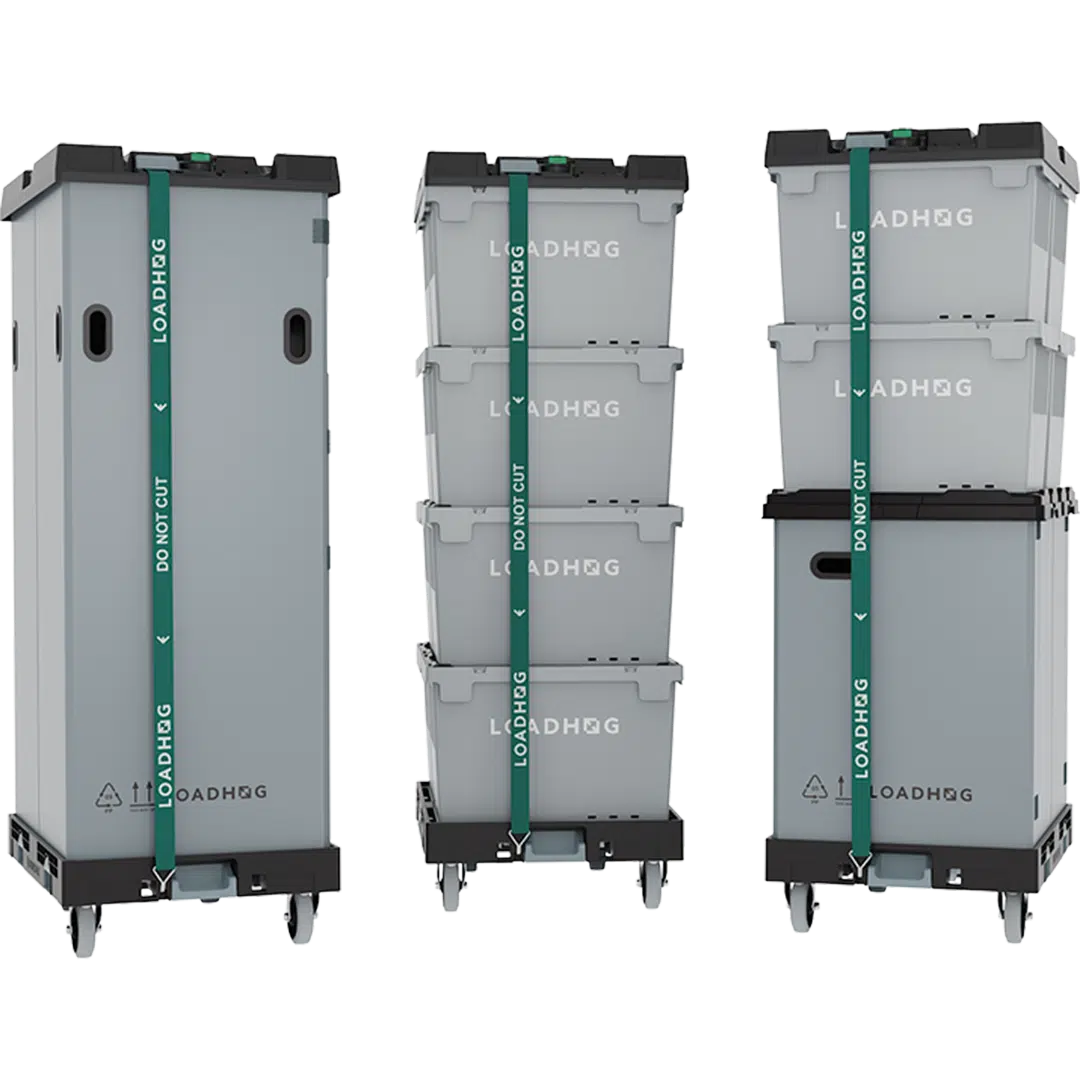
- Promoting the circular economy - Our transport solutions reduce the need for disposable packaging and make a significant contribution to the conservation of precious resources.
- Reuse before recycling - Loadhog products are designed for a long service life and repeated use. Thanks to reuse, cleaning and return schemes, recycling is kept to an absolute minimum.
- Waste reduction through targeted recycling - Waste is processed and recycled by our partner, then made available for reuse.
- Individual labelling and traceability - Our packaging can be individually marked using RFID tags, barcodes or QR codes.
- Take-back of old packaging - We collect used packaging from our customers, recycle it appropriately and reintroduce the materials into the production process.
Why switch to reusable transport packaging (RTP)?
The benefits
- Compliance with reuse and recyclability targets
- Reduction in material costs and disposal charges
- Improved supply chain efficiency
- Reduction in CO2 emissions
Lifespan
- +/- 10 years – depending on usage scenarios and handling methods
- The break-even point for reusable packaging is generally reached after 5 to 15 cycles, depending on logistics processes and wastage rates.
The savings
- Reduction in product damage
- Space savings in the warehouse and during transport
- Improved handling efficiency
- Support for automation and traceability


